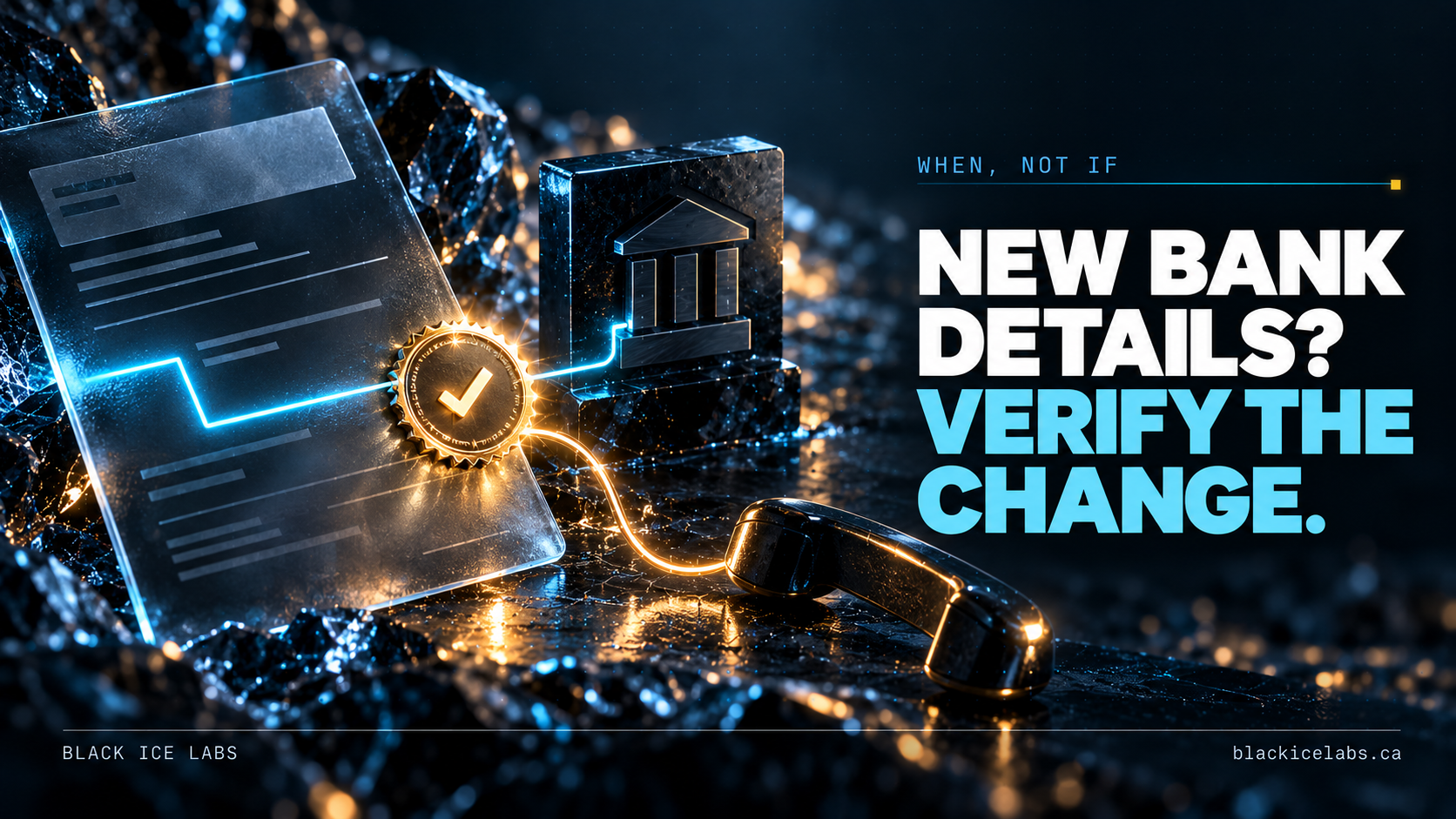
Changing a supplier's payment destination deserves its own check. A real invoice and a familiar conversation can still contain a fraudulent change.
Business email compromise can involve an impersonated sender or a legitimate account that someone else controls. Canada's Competition Bureau recommends validating transfer requests through another means of communication. The Canadian Cyber Centre also describes thread hijacking: an attacker enters an existing conversation to make a request appear credible.
That is why recognizing the project, the logo or the person's name is an incomplete check. Those details may already be available to the attacker.
Separate the change from the request
Consider a hypothetical supplier who emails revised banking details shortly before an invoice is due. The first decision is whether to accept the change. Paying the invoice comes after that decision.
Use a contact route established independently of the new message, such as a previously verified number in the supplier record. Do not use a replacement number simply because the same email supplied it. The Australian Signals Directorate's guidance similarly recommends independently verified contact details when checking suspicious requests.
A call does not become reliable merely because it is a different medium. If the route itself came from the questionable request, the verification can lead back to the same person. The purpose is to reach a trusted source independently, not to tick a box labelled phone call.
Make pausing an ordinary action
A small company may rely on one person to process payments. That person needs a clear rule they can apply even when a request appears to come from the owner or an important customer.
A simple process could say that payment details remain unchanged until the independent check is complete. It should name who can resolve a discrepancy and how a substitute handles the process during an absence. The rule is easier to follow when urgency does not silently cancel it.
Record who performed the verification and when it happened. Keep sensitive banking information in the appropriate protected system rather than copying it into a widely shared checklist. Documentation should support the decision without creating another unnecessary disclosure.
Rehearse without moving money
Use a fictional invoice and a harmless proposed change. Ask the person handling it to show which contact record they would use, who would approve the update and what they would do if nobody answered.
The exercise can reveal that the trusted number has never been verified or that only one employee knows the approval route. Fixing those gaps before a live request is much easier than discovering them under a payment deadline.
If you suspect a fraudulent transfer has already happened, contact your bank immediately through an official route and follow the relevant reporting process. Do not assume that a transfer can be recovered or wait for reassurance from the questionable sender.
For a broader conversation about incident preparation, explore the Black Ice Labs Breach Readiness Interview.
Sources
Competition Bureau Canada — common scams targeting Canadian businesses
Australian Signals Directorate — Protecting against business email compromise